
The BMW Z4 is a symbol of luxury, freedom, and precision German engineering. From its debut in 2003 as a successor to the Z3, it has captured the hearts of roadster enthusiasts worldwide. Known for its “flame surfacing” design and screaming inline-six engines, the Z4 is a staple of the sports car world. However, like any performance machine, certain years have proven to be more reliable than others.
If you are in the market for a sleek roadster, understanding the BMW Z4 years to avoid is the difference between a dream drive and a financial nightmare. In this 2,000-word definitive guide, we break down every generation, pinpoint mechanical failures, and provide professional maintenance tips to ensure your investment stays on the road.
Understanding the BMW Z4 Generations
To navigate the used market, you must distinguish between the three distinct lifecycles of the Z4. Each generation represents a complete redesign in chassis, roof technology, and powertrain.
- First Generation (E85 Roadster / E86 Coupe): 2003–2008 – The original Z4 with a soft-top or fixed roof. Known for raw, analog driving and the iconic “Z” body lines.
- Second Generation (E89): 2009–2016 – Famous for its retractable folding hardtop. This generation shifted the Z4 from a raw sports car to a refined Grand Tourer.
- Third Generation (G29): 2019–Present – Developed alongside the Toyota Supra. It returned to a soft-top and focuses heavily on modern technology and aggressive performance.
BMW Z4 Years to Avoid: First Generation (E85/E86)
The E85 generation is highly sought after today, but the early models were plagued by several specific issues that can be expensive to fix.
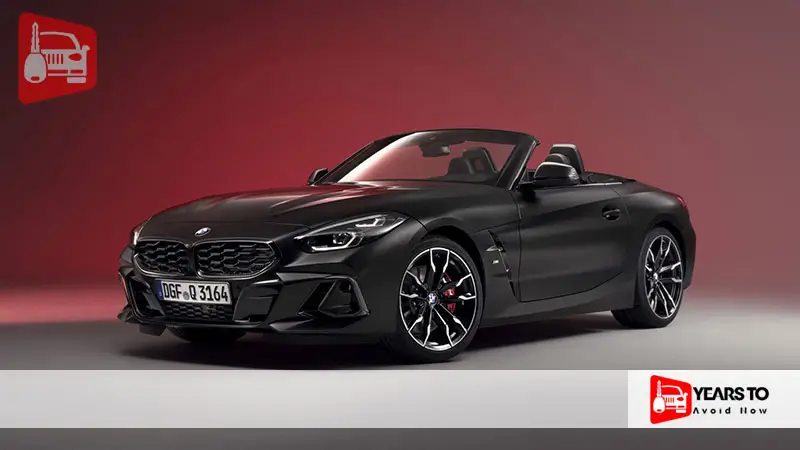
The Infamous 2003 Model: Avoid at All Costs
As the debut year, the 2003 BMW Z4 is the most problematic. It suffered from a trio of defects that are safety-critical.
- Sticky Steering: This is the #1 red flag. In warm weather, the grease in the electronic steering column expands, causing the steering to feel “notched.” At highway speeds, the wheel won’t return to center easily, requiring significant effort for small corrections. A new column costs over $2,500.
- Drowning Convertible Motors: BMW placed the hydraulic roof motor in a drainage bowl. If leaves clog the tiny drains, the motor sits in a puddle and shorts out. Replacing it requires removing the entire soft-top.
- Door Latch Faults: Many owners reported doors that would either refuse to open or pop open while the vehicle was in motion.
The 2005 & 2007 Models: Safety and Electronics
- 2005 Steering Issues: While improved, the “sticky steering” persisted in many 2005 units.
- 2007 Airbag Malfunction: This year saw a spike in reports regarding unintended airbag deployment. Airbags would fire off without an impact, posing a severe safety risk and potentially totaling the car’s value.
- Expansion Tank Leaks: The 2005 models frequently experience cracked plastic coolant expansion tanks, leading to instant overheating.
BMW Z4 Years to Avoid: Second Generation (E89)
The E89 brought luxury with its folding metal hardtop, but added complexity meant more points of failure.
2009–2011: The N54 Twin-Turbo Struggles
Models equipped with the sDrive35i badge (N54 engine) are legendary for power but infamous for reliability.
- High-Pressure Fuel Pump (HPFP): This pump failed so often it resulted in a class-action lawsuit. A failing HPFP causes “limp mode,” stalling, and long crank times.
- Turbo Wastegate Rattle: Over time, the turbos develop a rattle that leads to a loss of boost pressure. Fixing this requires replacing both turbos—a $4,000+ job.
- Leaking Injectors: Early-gen injectors (Index 9 or lower) are prone to leaking, which can ruin spark plugs and catalytic converters.
2012–2013: Timing Chain Terror (N20 Engine)
In these years, BMW introduced the N20 four-cylinder turbo engine.
- Plastic Timing Chain Guides: The plastic guides can shatter, causing the timing chain to skip or snap, which destroys the engine instantly. If buying these years, ensure the timing chain components have been updated.
Common Mechanical Pitfalls: The “Z4 Weak Spots”
Regardless of the year, all used BMW Z4s share common “weak spots” that every buyer should inspect:
- Cooling System Fatigue: BMW uses plastic expansion tanks and water pumps. These typically fail every 60,000 to 80,000 miles. If the water pump fails, the engine can overheat in seconds.
- Oil Leaks (The Big Three):
- Valve Cover Gasket: Leaks oil onto the hot exhaust, causing a burning smell.
- Oil Filter Housing Gasket (OFHG): If this leaks, oil can drip onto the serpentine belt, causing it to snap and get sucked into the engine.
- Oil Pan Gasket: A labor-intensive and expensive fix.
- DISA Valves (E85): In early models, the DISA valve flap can break and get sucked into the intake manifold, causing catastrophic engine damage.
Interior & Cosmetic Issues to Watch For
A BMW Z4 should look as good as it drives, but some years show age poorly.
- Melting Door Handles (E89): The rubberized coating on the inner door handles becomes “sticky” or “melts” in hot climates, leaving black residue on your hands.
- Peeling Soft-Touch Plastics: Many early E85 models suffer from peeling paint on the center console and window switches.
- Leaking Rear Windows: In the E85 Roadster, the glue holding the glass rear window to the fabric top can fail. Replacing the entire soft top is often the only permanent fix.
The “Golden Years”: Best BMW Z4 Years to Buy
If you want the Z4 experience without the constant mechanical anxiety, focus your search on these:
- 2006–2008 (E85/E86) with N52 Engine: Specifically the 3.0si. The N52 is a naturally aspirated inline-six and is widely considered one of BMW’s most reliable engines.
- 2014–2015 (E89) Facelift: By 2014, BMW had revised the timing chain guides and the hardtop sensors were much more reliable.
- 2020–Present (G29): The B58 engine in the M40i is proving to be exceptionally robust. These are “Toyota-approved” engines that have shown great long-term durability.
Maintenance Checklist for Longevity
To keep your BMW Z4 running like new, follow this professional advice:
- Oil Changes: Don’t wait for BMW’s 15,000-mile interval. Change your oil every 5,000 to 7,500 miles to prevent VANOS and timing chain issues.
- Roof Care: Lubricate the seals of your convertible top annually. For E85 owners, relocate the roof motor to the trunk to prevent water damage.
- Drainage Cleaning: Clear the “soft-top drains” every autumn to prevent cabin leaks and motor failures.
- Battery Health: BMWs are sensitive to low voltage. A weak battery can cause “ghost” electrical errors in the roof and transmission.
Performance Modifications & Reliability
Many Z4 owners want more speed, but tuning affects reliability:
- Software Tunes: While the B58 handles tunes well, a tuned N54 (2009-2011) will likely experience faster failure of its fuel injectors and ignition coils.
- Run-Flat Tires: Most Z4s came with Run-Flats, which are harsh. Switching to standard performance tires (like Michelin Pilot Sport 4S) improves ride quality and reduces stress on suspension bushings.
The Future Classic: Investment Potential
For investors, the 2006–2008 M Coupe (E86) and the 2019+ M40i (G29) are the strongest candidates for appreciation. Avoiding the “problem years” isn’t just about saving repair money; it’s about protecting the resale value of your asset. A 2003 Z4 with a documented “sticky steering” fix is worth significantly more than one without it.
Frequently Asked Questions (FAQ)
Is the BMW Z4 a good daily driver?
Yes, especially the E89 and G29 models. They offer decent trunk space (for a roadster) and comfortable interiors. However, the E85 is a bit louder and stiffer for long commutes.
How much does it cost to maintain a BMW Z4?
Expect to spend $800–$1,500 per year on maintenance. Using an independent BMW specialist instead of a dealership can save you up to 40% on labor costs.
Which engine is the most reliable?
The N52 (3.0L non-turbo) and the newer B58 (3.0L turbo) are the top picks for reliability.
How do I prevent the convertible top motor from failing?
Clean your drainage channels every six months. If water pools in the trunk or behind the seats, your drains are clogged, and the motor is at risk.
Is the “Sticky Steering” fix permanent?
Yes, if the steering column is replaced with the updated part or properly rebuilt by a specialist, the issue typically does not return.
Conclusion: Drive Your Dream Safely
Choosing the right BMW Z4 is a balance between passion and pragmatism. While the 2003, 2007, and early turbo models (2009-2011) have their share of headaches, a well-chosen Z4 is one of the most rewarding cars you can own.
Always prioritize a car with a documented maintenance history and, if possible, opt for a Pre-Purchase Inspection (PPI) by a qualified technician. A well-maintained Z4 is more than just a beautiful car; it is an exhilarating driving machine that provides joy on every curve. Stay cautious, drive smart, and enjoy the thrill of the road in your perfect Z4!