
The Dodge Durango has carved out a unique niche in the SUV market. Positioned as the “muscle car” of three-row haulers, it offers a level of towing capacity and V8 rumble that few competitors can match. From its truck-based origins in the late 90s to the sophisticated unibody “DT” platform of today, the Durango is a favorite for families who refuse to compromise on power.
However, like any vehicle with a 25-year production run, the Durango has had its share of mechanical “dark ages.” Buying the wrong year can lead to a never-ending cycle of electrical glitches, engine failures, and safety recalls.
In this exhaustive 2,000-word guide, we dive deep into the technical architecture of the Dodge Durango. We identify the specific Dodge Durango years to avoid, explain the engineering flaws behind their most common failures, and provide a definitive list of the “Safe Years” to help you make a wise investment.

Navigating the Generations: A Technical Overview
To understand why certain years fail, we must first look at the three distinct generations of the Durango.
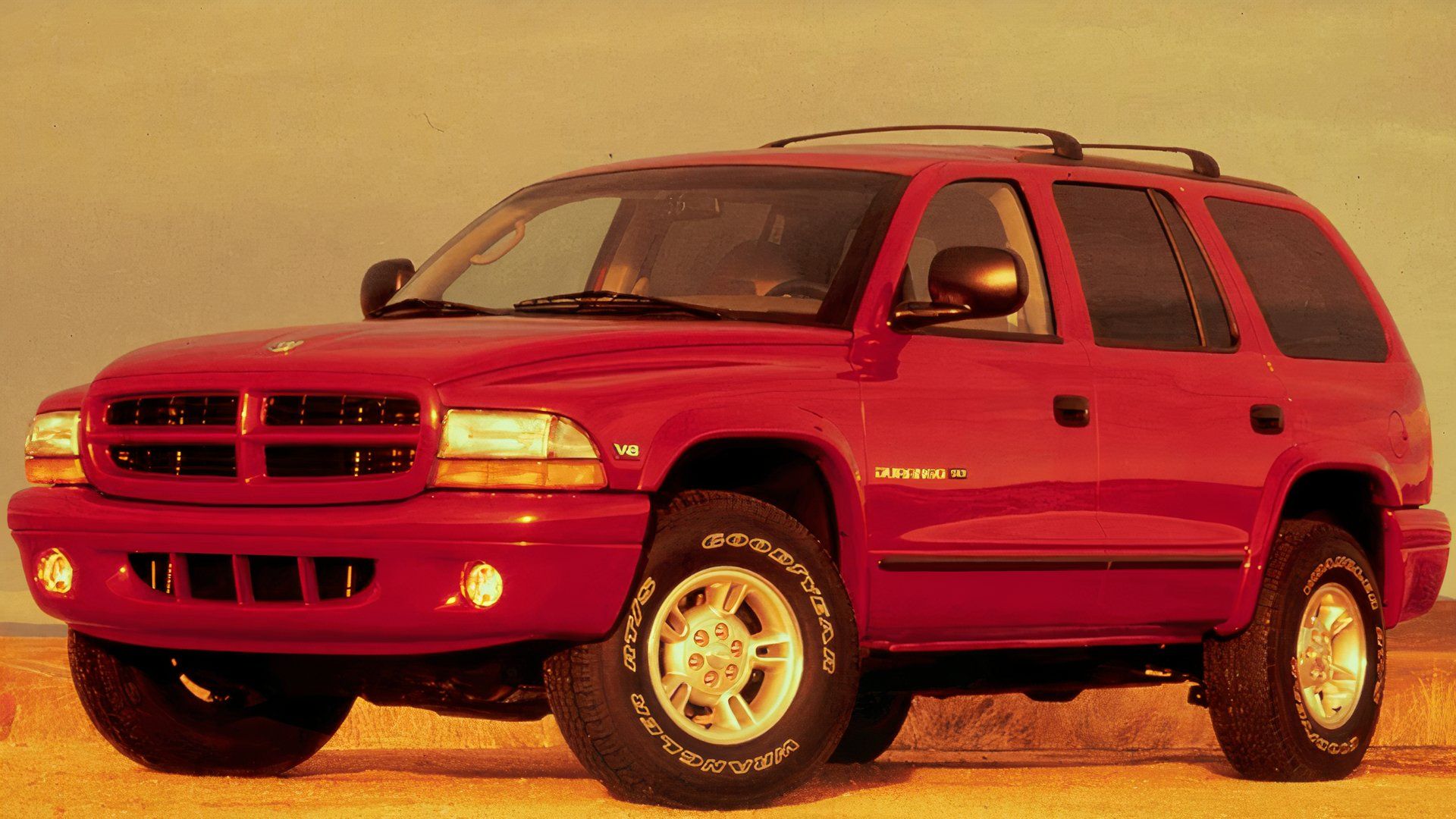
First Generation (1998–2003): The Truck-Based Original
Built on the Dodge Dakota pickup chassis, these were rugged body-on-frame SUVs. While excellent for towing, they were plagued by 90s-era Chrysler build quality issues and severe rust vulnerability.
Second Generation (2004–2009): The “Big” Durango
Dodge went bigger and bolder, but this generation is arguably the most problematic. It introduced the 4.7L and 5.7L V8s in a larger body but suffered from catastrophic engine design flaws and fuel system defects.
Third Generation (2011–Present): The Unibody Revolution
Sharing a platform with the Jeep Grand Cherokee, this generation moved to a unibody construction. It is the most refined and safest generation, but the early years (2011–2014) were a laboratory for electrical and transmission experiments that didn’t always go well.
The “Avoid” List: Dodge Durango Years to Skip
When analyzing data from the NHTSA (National Highway Traffic Safety Administration) and long-term owner reports, the following years stand out as the highest risk for buyers.
The Suspension & Sludge Crisis: 1999–2000
These early models are tempting for budget buyers, but they suffer from a “fatal” safety flaw.
- Front Suspension Collapse: The upper ball joints were notoriously weak. If they snapped while driving, the front wheel could literally detach from the vehicle. Dodge eventually issued a massive recall, but many used units still carry worn, dangerous components.
- 4.7L Engine Sludge: This engine was highly sensitive to oil temperatures. If the oil wasn’t changed religiously every 3,000 miles, it would turn into a thick, black gel (sludge), leading to oil starvation and a seized engine.
The “Worst Year” in Durango History: 2004
If there is one year you should walk away from immediately, it is 2004.
- The Cowl Water Leak: A design flaw in the plastic cowl (the area at the base of the windshield) allowed rainwater to leak directly onto the engine. This water would get sucked into the air intake or sit on the engine sensors, causing the SUV to stall in heavy rain or, worse, “hydrolock” the engine entirely.
- Interior Quality: This was the peak of “cheap plastic” interiors that rattle, crack, and peel within a few years of ownership.
The Fuel Spill-Back Hazard: 2005
The 2005 model inherited the engine issues of ’04 but added a dangerous fuel system defect.
- Refueling Sprays: A faulty check valve in the fuel tank caused gasoline to splash back out of the filler neck during refueling. This wasn’t just a mess; it was a significant fire hazard. Despite recalls, many owners report the issue persists on used models.
The TIPM Electrical Nightmare: 2011–2013
This era marked the beginning of the 3rd Generation. While the truck looked modern, its “brain” was faulty.
- Totally Integrated Power Module (TIPM): The TIPM is the central hub for all electrical signals. When it fails, the car “acts possessed.” The fuel pump might stay on after the car is off (killing the battery), the engine might stall at highway speeds, or the horn might start honking randomly.
- Cost of Repair: A new TIPM can cost upwards of $1,500, and refurbished units are often in short supply.
Transmission Software Glitches: 2014
2014 was a transitional year for the 8-speed transmission.
- The “Lurch”: Software calibration issues led to harsh downshifts when coming to a stop, often making the driver feel as if they had been rear-ended.
- Racetrack Tail Light Leaks: The signature LED light bar across the back was poorly sealed, allowing water to enter the housing and short out the expensive LED array.
Technical Comparison Table: Reliability & Faults
| Era / Generation | Specific Years to Avoid | Reliability Rating | Primary Technical Failure Point |
| 1st Gen | 1999–2000 | 2/10 | Suspension Collapse & Engine Sludge. |
| 2nd Gen | 2004–2005 | 1/10 | Engine Hydrolock & Fuel Tank Defects. |
| 3rd Gen | 2011–2013 | 4/10 | TIPM (Electrical) & Fuel Pump Relays. |
| 3rd Gen | 2014 | 5/10 | Transmission Shifting & Tail Light Leaks. |
| 3rd Gen | 2017–2021 | 8/10 | The “Sweet Spot” for Reliability. |
Deep Dive: The “HEMI Tick” – Mechanical vs. Exhaust
For any potential buyer looking at a 5.7L V8 Durango, you must be able to distinguish between a minor annoyance and a total engine rebuild.
The “Cheap” Tick: Exhaust Manifold Bolts
The 5.7L HEMI generates significant heat. The steel exhaust manifold bolts often snap off inside the aluminum cylinder head due to thermal expansion.
- The Symptom: A loud ticking sound that is most prominent when the engine is cold. As the engine warms up and the metal expands, the gap closes, and the sound usually disappears.
- The Fix: Drilling out the broken bolts. This costs about $500 to $800.
The “Expensive” Tick: Lifter Failure
- The Symptom: A rhythmic, metallic “clack” that persists even after the engine is fully warmed up. It often gets louder and faster as you increase the RPMs.
- The Cause: Needle bearings in the lifter rollers fail, causing the lifter to grind a flat spot onto the camshaft lobe.
- The Fix: Replacing the camshaft and all 16 lifters. This is a massive job costing between $3,500 and $5,000.
The “Pentastar” Alternative: 3.6L V6 Reliability
While the V8 gets all the glory, the 3.6L Pentastar V6 (introduced in 2011) is the reliability hero of the Durango lineup.
- Why it’s better: It lacks the complex lifter issues of the HEMI and is much easier to maintain for the average family.
- The One Weakness: Early versions (2011–2013) had cylinder head issues (P0300 codes). However, after 2014, this was resolved. If you want a reliable family SUV, a 2016+ Pentastar V6 is one of the safest bets in the used market.
Drivetrain Vulnerabilities: Transmission & AWD
The 8-Speed ZF (8HP70 / 8HP45)
Since 2014, the Durango has used the ZF 8-speed transmission. It is one of the best transmissions in the world, but it has a maintenance trap.
- The Maintenance Trap: Dodge claims this is a “Lifetime Fluid” unit. Technically, it is not. ZF recommends changing the fluid and filter every 60,000 to 75,000 miles. Neglecting this leads to rough shifting and gear hunting by 120,000 miles.
The Transfer Case Shift Issue
In 2014–2015 models, some owners reported the AWD system shifting into 4WD Low or Neutral on its own while driving. This was a software glitch that Dodge addressed with a recall, but always check the service history to ensure the Transfer Case Control Module (TCCM) was updated.
The “Golden Years”: Which Dodge Durango to Buy?
If you want to avoid the “Years to Avoid” and secure a reliable SUV, target these specific models:
2009 RAM Durango (The Final 2nd Gen)
By the very end of the second generation, Dodge had fixed the engine cooling issues and the fuel spill-back. If you need a cheap, truck-based SUV for towing, the 2009 is surprisingly solid.
2017–2020 RAM Durango (The 3rd Gen Peak)
This is the “Goldilocks” era. By 2017, the TIPM electrical issues were completely solved, the 8-speed transmission was perfectly tuned, and the interior featured the much-improved Uconnect 4 system with Apple CarPlay and Android Auto.
2021–Present (The Modern Powerhouse)
The 2021 refresh brought a massive interior overhaul inspired by the Challenger. These models are the most refined, featuring the best safety tech and the most durable versions of both the V6 and V8 engines.
Buyer’s Technical Inspection Checklist
Before purchasing any used Durango, use this technical checklist:
- The “Water Test”: Pour water over the cowl area (base of the windshield) with the engine running. If the engine stumbles or the RPMs drop, the cowl seal is failing—avoid the car or negotiate a fix immediately.
- The “Mold” Sniff: Smell the interior, specifically the spare tire well and the front passenger floorboard. This indicates a leaking sunroof drain or AC evaporator, which can lead to expensive mold remediation.
- The “Lurch” Test: During the test drive, come to a very slow stop. If the car “kicks” you right before stopping, the transmission or its software is failing.
- Oil Cap Check: Open the oil fill cap and look for a “milkshake” (white/creamy) or thick black sludge. If you see it, the engine is a ticking time bomb.
- VIN Recall Search: Always run the VIN on the NHTSA website. The Durango has had major recalls for fuel pumps and brake boosters; ensure they were completed for free.
Frequently Asked Questions (FAQs)
What is the most common problem with a Dodge Durango?
The most reported issue across all generations is electrical glitches, specifically related to the TIPM (Totally Integrated Power Module) in 2011–2013 models and infotainment freezes in newer models.
How many miles will a Dodge Durango last?
A well-maintained Durango can easily reach 200,000 to 250,000 miles. The Hemi V8 is a high-mileage engine, provided you avoid excessive idling and use the correct oil weight (5W-20).
Is the Durango expensive to maintain?
Compared to a Toyota Highlander, yes. Compared to a BMW X5 or Audi Q7, no. It sits in the middle; parts are cheap because they are shared with Jeep and Ram, but labor can be high for complex V8 repairs.
Which engine is better: the V6 or the V8?
For reliability and daily commuting, the 3.6L Pentastar V6 is better. For towing and performance, the 5.7L Hemi V8 is the king, but it requires more careful maintenance to avoid lifter failure.
Why is the 2004 model rated so poorly?
It suffered from a catastrophic design flaw where water could enter the engine through the cowl, leading to thousands of dollars in engine damage from a simple rainstorm.
Is the 8-speed transmission actually “lifetime”?
No. ZF, the manufacturer, recommends fluid changes every 60k-80k miles. Ignoring this leads to premature wear.
What is the “Racetrack” tail light issue?
The long LED bar on the trunk of 2014+ models often leaks water, causing the LEDs to burn out. Replacing the unit can cost over $1,000.
Are parts expensive for the Dodge Durango?
Powertrain parts are affordable, but exterior body panels and high-end LED lighting components for the 3rd generation are quite expensive.
Can I drive with a HEMI tick?
If it is an exhaust manifold leak, yes. If it is a lifter failure, no—doing so will send metal shards through your engine and kill it completely.
Which trim is most reliable?
The GT and SXT trims tend to be the most reliable long-term because they lack the complex air suspension and high-strung performance parts found on the SRT models.
Conclusion: Choosing Reliability Over Hype
The Dodge Durango is a fantastic SUV, but it requires a “buyer beware” mindset. By steering clear of the Dodge Durango years to avoid—specifically the 2004 engine failures, the 2011–2013 electrical nightmares, and the early 2014 transmission quirks—you are already ahead of the curve.
Focus on the 2017–2020 models for the best value or a 2021+ for the best technology. Always prioritize a vehicle with a documented service history over a “deal” that seems too good to be true.