
The Ford Econoline, also known as the Ford E-Series, is the undisputed king of the American full-size van segment. Produced for over six decades, it has served as the backbone for small businesses, ambulance fleets, and adventure-seeking van-lifers. However, with such a long production run, the mechanical variations are vast. While some Econolines are capable of reaching 500,000 miles, others are plagued by catastrophic engine failures, spark plug “ejections,” and transmission meltdowns.
If you are entering the used market for a Ford Econoline, “buyer beware” is the golden rule. In this 2,000-word technical deep dive, we identify the Ford Econoline years to avoid, explain the critical “pain points” that haunt specific engines, and provide a roadmap to finding the most reliable workhorse for your needs.
The Generations: A Quick Technical Overview
To understand which years to avoid, we must categorize the Econoline by its modern generations:
- Third Generation (1975–1991): The classic “box” design. Mostly carbureted engines, heavy steel frames, and simplistic electronics.
- Fourth Generation (1992–2014): The most common version on the road today. This era introduced the modular V8 and V10 engines, advanced safety features, and eventually, the transition to the Ford Transit.
Ford Econoline: Critical Years to Avoid
When analyzing reliability data from the NHTSA and long-term fleet maintenance logs, three specific eras stand out as problematic.
The “Spark Plug Ejection” Era: 1997–2003
This is perhaps the most notorious period in Ford’s powertrain history. During these years, the 6.8L V10 and the 5.4L V8 (2-valve Triton engines) were equipped with cylinder heads that had insufficient threading for the spark plugs.
- The Technical Failure: Because there were only about four threads holding the spark plugs in place, the pressure from combustion would eventually cause the spark plug to “spit” or eject out of the cylinder head, often stripping the threads and destroying the ignition coil in the process.
- The Result: A sudden, loud popping sound followed by a dead cylinder. Repairing this requires a “Time-Sert” or “Heli-Coil” kit, which can cost $600 to $1,200 per cylinder at a professional shop.
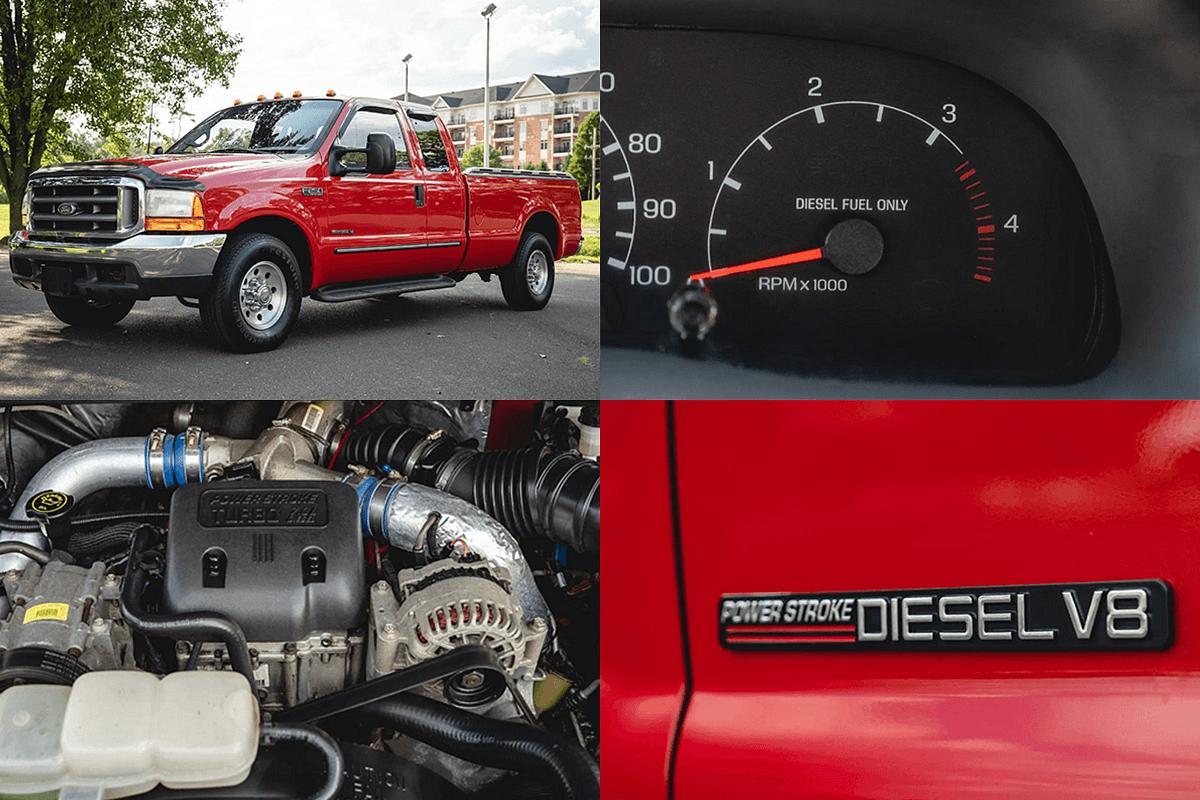
The 6.0L PowerStroke Diesel Disaster: 2004–2007
If you are looking for a diesel Econoline, these are the years that cause the most heartbreak. Ford replaced the legendary 7.3L diesel with the 6.0L PowerStroke, which was plagued by emissions-related failures.
- The Technical Failure: The Oil Cooler would clog, leading to the failure of the EGR (Exhaust Gas Recirculation) Cooler. This would cause extreme pressure in the cooling system, eventually stretching the head bolts and blowing the head gaskets.
- The “Bulletproofing” Cost: To make this engine reliable, owners must “bulletproof” it—a process involving upgraded head studs, new oil coolers, and EGR deletes, which can easily exceed $5,000 to $8,000.
The Early 5R110 Transmission Issues: 2004–2005
While the TorqShift 5-speed transmission is generally strong, the earliest versions in the E-Series suffered from internal hardware failures.
- The Issue: A snap ring inside the transmission could come loose, leading to a total loss of reverse gear or significant slipping in forward gears.
Critical Technical “Pain Points” by Engine Type
| Engine | Affected Years | Severity | Primary Fault |
| 4.2L V6 | 1997–2003 | Moderate | Intake manifold gasket leaks (hydro-locking risk). |
| 4.6L / 5.4L V8 | 1997–2003 | High | Spark plug ejection (blown out of head). |
| 6.8L V10 | 1999–2004 | High | Exhaust manifold bolt snapping & Spark plug ejection. |
| 6.0L Diesel | 2004–2007 | Critical | Head gasket failure & EGR cooler clogging. |
| 6.4L Diesel | 2008–2010 | Critical | DPF clogging and fuel dilution in oil. |
The Exhaust Manifold Bolt Snap (V10 Engine)
The 6.8L V10 is an incredible engine for towing, but it has a thermal expansion problem. The rear exhaust manifold bolts are prone to snapping off inside the cylinder head.
- The Symptom: A loud “ticking” sound when the engine is cold that disappears once the metal expands.
- The Fix: This often requires removing the engine or the inner fender wells to drill out the broken studs—a labor-intensive and expensive task.
Transmission & Drivetrain Vulnerabilities
The Econoline’s drivetrain is generally robust, but there are specific technical failures to watch for:
The Death Wobble (E-250 & E-350)
Heavy-duty Econolines use a Twin I-Beam front suspension. Over time, the ball joints and radius arm bushings wear out.
- The Technical Failure: When these components fail, hitting a bump at high speeds can trigger a violent shaking of the steering wheel, known as the “Death Wobble.”
- Prevention: Inspect the front end every 15,000 miles. Replacing ball joints proactively is much cheaper than an emergency repair after a steering failure.
Differential Leaks
The rear Dana 60 or Dana 70 axles are nearly indestructible, but the pinion seals are known to leak. If the fluid level drops too low, the rear bearings will overheat and seize, potentially locking the rear wheels at speed.
The Best Ford Econoline Years to Buy
If you want a van that will last a lifetime, focus on these “Golden Years” where Ford perfected the platform.
The 7.3L PowerStroke Era (1995–2003)
This is the “Holy Grail” of Econolines. The 7.3L Diesel is widely considered one of the most reliable engines ever built. It lacks the complex emissions equipment of later diesels and can easily surpass 400,000 miles with basic maintenance.
The Late Model 5.4L & 6.8L (2009–2014)
By 2009, Ford had transitioned to the 3-valve or improved 2-valve heads that resolved the spark plug ejection issues. These vans also feature the updated interior and better braking systems.
- Reliability Tip: Look for the 2014 model. It was the final year of the passenger/cargo van before the Transit took over, meaning every technical bug had been ironed out by the factory.
Maintenance Checklist for Potential Buyers
Before you sign the title, use this technical checklist to identify hidden problems:
- The Cold Start Test: Listen for a “ticking” sound (broken exhaust studs) or a “knocking” sound (rod bearing wear).
- Transmission Fluid Color: Pull the dipstick. The fluid should be bright red. If it is dark brown or smells like burnt toast, the transmission is on its last legs.
- Brake Line Corrosion: Econolines are prone to rusted brake lines, especially near the fuel tank. Check for wet spots or heavy scaling.
- The “Vanos-Style” Phasers: On later 3-valve engines, listen for a “diesel-like” sound from a gasoline engine; this indicates the cam phasers are failing.
Conclusion: Choosing Your Workhorse Wisely
The Ford Econoline is a legendary vehicle, but it is not immune to engineering flaws. To ensure a reliable experience:
- Avoid the 1997–2003 V8/V10 gasoline models unless the spark plugs have been professionally updated with inserts.
- Avoid the 2004–2007 6.0L Diesel unless you have a “bulletproofing” budget of $5,000.
- Target the 2009–2014 models for gasoline reliability or the pre-2004 7.3L for diesel longevity.
By focusing on these technical specifications and avoiding known “lemon” years, you can find a Ford Econoline that serves you for decades. Knowledge is the best tool in your garage—use it before you buy.
Frequently Asked Questions (FAQs)
Is the Ford Econoline better than the Ford Transit?
Technically, the Econoline (E-Series) is better for heavy towing and extreme durability (body-on-frame). The Transit is better for fuel economy and interior cargo height (unibody).
Why do Ford Econoline spark plugs blow out?
This was due to a design flaw in the 1997–2003 Triton engines where the cylinder heads had too few threads (only 4) to securely hold the spark plugs under combustion pressure.
What is the most reliable engine in the Econoline?
The 7.3L PowerStroke Diesel (1995–2003) and the 2-valve 5.4L V8 (post-2005) are widely considered the most reliable engines in the lineup.
How many miles will a Ford Econoline last?
With proper maintenance, a gasoline Econoline typically lasts 250,000 miles, while a 7.3L diesel version can reach 500,000 miles.
Can I fix the “Death Wobble” on an E-350?
Yes. It usually requires replacing the steering damper, ball joints, and track bar bushings.
Does the 2014 Ford Econoline have spark plug issues?
No. By 2014, Ford had long resolved the threading issues in the cylinder heads.
Is the 6.0L Diesel really that bad?
From the factory, yes. However, once “bulletproofed” with aftermarket parts, it can be a very powerful and reliable engine.
Why does my Ford Econoline smell like gasoline inside?
This is often a sign of a leaking fuel injector o-ring or a spark plug that is beginning to loosen (pre-ejection). Have it inspected immediately.
What is the towing capacity of a Ford E-350?
Depending on the year and engine (specifically the V10), an E-350 can tow up to 10,000 lbs.
Are parts expensive for the Ford Econoline?
No. Because Ford produced millions of these vans and many parts are shared with the F-150, parts are some of the cheapest and easiest to find in the automotive world.